For
better health enjoy music.
Music Therapy is accepted worldwide; it’s mentioned in the Bible; and a pioneer in its modern development is a Christian.
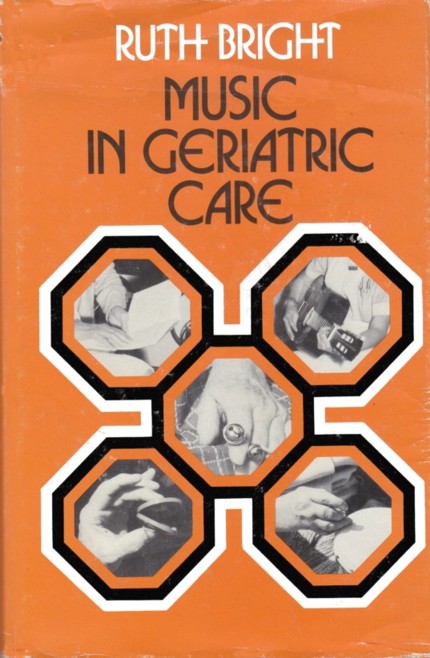
Ruth Bright (1972) discusses music to assist psychotherapy, motivation and socializing, as well as for brain damage, neurological disorders, orthopaedic disabilities, speech defects, respiratory diseases, stroke, and other disorders.
Reader’s Digest in “Music’s Surprising Power to Heal” (9/1992) mentions music therapy for pain, anxiety, depression, emotional and physical handicaps, and neurological disorders.
Case and Else (2003) describe music therapy for depression, autism and stroke and add: "Of, course, music therapy…has been with us for a couple of thousand years, but many people still class it as a Cinderella discipline. It has, however, achieved government recognition through the Health Professions Council of the UK and other parallel bodies worldwide."
THE BIBLE
15 And Saul’s servants said to him, “See now an evil spirit from God is tormenting you.
16 Let our lord now command the servants who attend you to look for someone who is skilful in playing the lyre; and when the evil spirit from God is upon you, he will play it, and you will feel better.”
17 So Saul said to his servants, “Provide for me someone who can play well, and bring him to me.”
…23
And whenever the evil spirit from God
came
upon Saul, David took the lyre and played it with his hand, and Saul
would
be relieved and feel better, and the evil spirit would depart from him.
(I Samuel 16:14-23)
Lyre-playing, however, did not
succeed every
time:
-
The next day an evil spirit from
God
rushed
upon
Saul, and he raved within his house, while David was playing the lyre,
as he did day by day. Saul had his spear in his hand; and Saul threw
the
spear, for he thought, “I will pin David to the wall.” (I Samuel
18:10-11;
19:9-10)
In the Bible “spirit” sometimes refers to supernatural beings, but only sometimes. The Hebrew ruach is also translated “wind”, “breath” and “mind”.
Ruach often refers to prevailing
emotions,
dispositions
and attitudes.
Saul’s problem, then, appears emotional.
What about the phrase “evil spirit from God”? Is the Bible teaching that God forces people to choose evil actions by implanting destructive emotional problems into their minds? No.
Job chapters 1 & 2 portrays “Satan” – a supernatural agency or “spirit” – as causing death, natural disasters, sickness and other mayhem. And God, in Job 1 & 2, is portrayed as permitting Satan to do such things.
Job interprets Satan’s detrimental impact as, “receiving…bad at the hand of God.” (2:10) The Bible, therefore, attributes to God everything, good or bad, that God permits. Put another way, the Bible teaches that God accepts part-responsibility for every evil he allows to happen. In that sense then, Saul’s “bad spirit” was “from the LORD” – because it was permitted or not prevented.
Enjoyment
of music and song together
with
being
“righteous” make for a flourishing old age:
-
1 It is good to give thanks to
the
LORD, to
sing
praises to your name, O Most High…
3 to the music of the lute and the harp, to the melody of the lyre.
4 For you, O LORD, have made me glad by your work; at the works of your hands I sing
for joy…
12 The righteous flourish like the palm tree, and grow like a cedar in Lebanon…
14 In old age they still produce fruit; they are always green and full of sap…
(Psalm 92)
The New Testament advises:
-
Sing psalms and hymns and
spiritual
songs
among
yourselves, singing and making melody
to the Lord in your hearts… (Ephesians 5:19)
Ruth Bright:
-
• Pioneered music therapy in
Australia and
founded
training courses for music therapists;
• Was inaugural president of the Australian Music Therapy Association;
• Helped establish the World Federation of Music Therapy in 1985 and was its
president 1990 to 1993.
Bright
was born in England in 1929,
came to
Australia
in 1948, studied music in Melbourne, and in 1960 introduced music
therapy
to Australia:
In Adelaide there was a big psychiatric hospital with a thousand people all in locked up wards with only one social worker. It was awful…and I wondered whether there was something I could do with music there. The psychiatrist who interviewed me said he wanted music in the hospital but…linked to the treatment of the people… By working there I began to see myself as a therapist... (Wise Women’s World Website)
Melbourne University established a degree in Music Therapy in 1978; The Australian Journal of Music Therapy began in 1990; and Australia had 160 registered music therapists in 2001.
REFERENCES:
Bright, R. 1972 Music In Geriatric Care, Angus & Robertson
Case, E. & Else, L. New Scientist, 29 November, 2003, p. 43
Lyons, J. Music lifts dementia’s constant fog, The Weekend Australian, February 23-24, 2008, Health p. 16
Wigram, T. et al 2002 A Comprehensive
Guide to
Music Therapy.